













1. Why choose an inflatable paddle board?
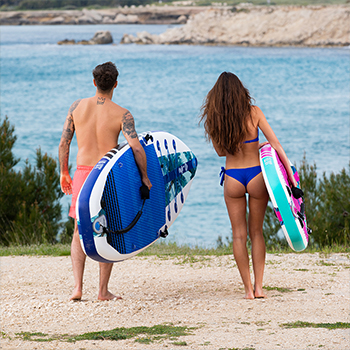
Inflatable paddle boards have several advantages that make them particularly appealing to water sports enthusiasts.
- Lightness: Inflatable paddle boards are generally lighter than their rigid counterparts, which makes them easier to handle. This means they can easily be carried over long distances, whether by car, by bike or even on foot.
- Easy to transport: Their foldable, inflatable design means they can be stored in a backpack or a carry bag, which is a major asset for those who love to travel. You can easily take them camping, travelling or even on a plane, without worrying about bulk.
- Ideal for storage: Inflatable paddle boards deflate and fold, which makes them perfect for storing at home. Whether you live in a flat with little space or want to keep them in your garage, they take up very little room once deflated.
- Stability and comfort: Although inflatable paddle boards are light, they are designed to offer good stability on the water. Many models feature advanced technologies that give them a rigidity comparable to that of hard boards when properly inflated.
- Accessibility: Inflatable paddle boards are often more affordable than rigid ones, which makes them accessible to a wider audience. They are also available in a variety of models and designs, so everyone can find the board that suits them.
- Versatility: Inflatable paddle boards are suited to different types of water activities, whether for relaxed paddling, yoga on the water, or even light surfing. This versatility makes them an excellent choice for families or for those who want to try different activities.
In short, choosing an inflatable paddle board means opting for a practical, economical solution suited to a variety of lifestyles and water activities. Whether you are a beginner or an experienced paddler, an inflatable paddle board can offer you an enjoyable experience on the water.
2. Which paddle board should I choose as a beginner?
For beginners, a medium-sized inflatable paddle board (around 10 to 11 feet long) that is fairly wide is recommended for extra stability.
3. How much weight can a paddle board support?
The maximum weight supported depends on the model. In general, a paddle board can support between 90 kg and 160 kg. Check the model's specifications to find out the exact limit.
4. Do I need to wear a life jacket when stand up paddling?
Yes, it is recommended to wear a life jacket for safety reasons, especially if you go far from the shore or if you are a beginner.
5. Can I use my paddle board in all sea conditions?
Beginners are advised to paddle in calm water. Waves, strong wind and currents can make SUP difficult
and dangerous for inexperienced people.
6. How do I look after an inflatable paddle board?
Rinse it with fresh water after each use to remove salt and sand. Store it in a dry place away from the sun
to prevent the material from deteriorating.
7. How long does it take to inflate a paddle board?
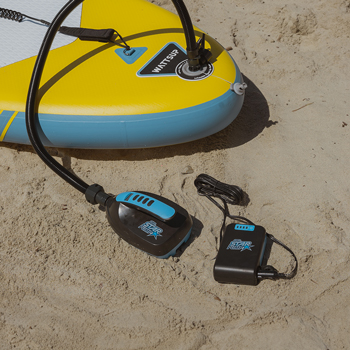
With a manual pump, it takes around 5 to 10 minutes. You can use an electric pump to make things easier.
8. What is the ideal pressure for an inflatable paddle board?
The recommended pressure is generally between 12 and 15 PSI.
9. What is the difference between an all-around paddle board and a touring paddle board?
The all-around paddle board is versatile and ideal for beginners, whereas the touring paddle board is longer and narrower, designed for long-distance cruising with better glide.
10.Why use a leash when stand up paddling?
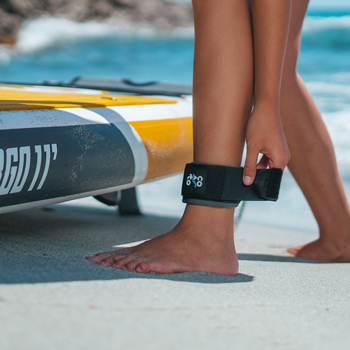
The leash is important to avoid losing your board if you fall, especially at sea or on a river. It keeps you attached to the board and avoids dangerous situations.
11. How long does an inflatable paddle board last?
With good care, an inflatable paddle board can last between 5 and 10 years. Avoid prolonged exposure to the sun and handle it carefully to extend its lifespan.
12. How do I repair a deformed fin on my SUP board?
If your fin or fin mount is deformed, it is often due to cold temperatures or to folding the board. To repair this, leave the inflatable board at room temperature for 24 hours before the initial inflation. You can also heat the area with a hairdryer, heating the material evenly so that it regains its original shape.
13. How long does an inflatable paddle board last?
With good care, an inflatable paddle board can last between 5 and 10 years. Avoid prolonged exposure to the sun and handle it carefully to extend its lifespan.
14. How do I repair a deformed fin on my SUP board?
If your fin or fin mount is deformed, it is often due to cold temperatures or to folding the board. To repair this, leave the inflatable board at room temperature for 24 hours before the initial inflation. You can also heat the area with a hairdryer, heating the material evenly so that it regains its original shape.
15. How do I insert the fin into the slot on my SUP board?
To insert the fin into the slot on the board, start by removing the small "ladder" that blocks the fin. Then insert the fin, pushing slightly if there is any resistance. Make sure you position the lock properly to stop the fin from coming off during use.
16. What should I do if there is a leak at the valve of my paddle board?
If you have a leak at the valve, start by removing the cap and tightening the upper part of the valve with the supplied wrench, clockwise. If the leak persists, unscrew the upper part, adjust the lower part so that it is properly centred, then screw it back on and tighten firmly. These simple steps should solve the problem.
17. Where can I buy spare parts for my out-of-warranty SUP?
If your product is out of warranty, you can visit our supplier's website to buy spare parts.
18. What should I do if I notice bubbles on my SUP board?
If you notice bubbles, here is how to identify and deal with them:
Scenario 1: Bubble under the valve If the bubble is under the valve, this is normal and needs no action. Everything is fine.
Scenario 2: Soft bubble If the bubble is soft, it may be due to air trapped during bonding. To repair it, make a small cut to pierce the bubble. See our video for a detailed guide.
Scenario 3: Hard bubble If the bubble is hard, please contact us directly. We will take care of resolving the problem.

Une question ? Consultez la FAQ, écrivez-nous ou appelez le 09 70 19 52 99.