Language:
Currency:


Explore our selection of quality wakeboards on SUPFactory. Tame the waves in style with our cutting-edge equipment!
Active filters
check_circle Lowest price guaranteed: found it cheaper elsewhere? We will match the lowest price and give you a free Drybag.
| swap_vertLONGUEUR : | 140cm |
 ROCKER : |
3 levels |
| swap_vertLONGUEUR : | 140cm |
| ROCKER : |
3 levels |
| swap_vertLONGUEUR : | 141cm |
| swap_horizLARGEUR : | 40,9cm |
| ROCKER : |
continuous |
| swap_vertLONGUEUR : | 136cm |
| swap_horizLARGEUR : | 40,4cm |
| ROCKER : |
continuous |
| swap_vertLONGUEUR : | 142cm |
| swap_horizLARGEUR : | 42,5cm |
| ROCKER : |
3 levels |
| swap_vertLONGUEUR : | 138cm |
| swap_horizLARGEUR : | 41,5cm |
| ROCKER : |
3 levels |
| swap_vertLONGUEUR : | 139cm |
| swap_horizLARGEUR : | 44cm |
| ROCKER : |
3 levels |
| swap_vertLONGUEUR : | 143cm |
| swap_horizLARGEUR : | 43,5cm |
| ROCKER : |
hybrid |
This board appeared in New Zealand in the 1970s under the name "SKURF" with the help of Allan Byrne.
This man, a surfing enthusiast, wanted to create a versatile board that could be towed by boats to easily reach spots with big waves and be able to release it with a simple hand gesture.
After developing several models, Tony Finn, based in San Diego, created a brand called "Skurfer" to market this new technology.
Gradually, riders realised that it was possible to use the waves created by boats so as to use their board without depending on weather conditions. It became possible to practise the discipline on calm water, which until then had been impossible, and it was from this moment that this category of board began to be nicknamed "wakeboard".

Later in Europe, around the 1990s, wakeboarding developed, notably in France, through Gilles Becker, as well as Gilles Becker and many others.
In 1995, wakeboard manufacturers introduced new, thinner boards with the particularity of being symmetrical: they have neither front nor back. The fact that the front and back of the board are identical makes it possible to ride in either direction without difficulty.
During the 2000s, skaters, snowboarders and surfers took part in creating associations to allow the sport to be practised on water ski lifts.
With no waves when using cable parks and their cable, the sport evolved with the appearance of the first modules and various floating elements such as kickers.
Design technologies and equipment quality continue to evolve to improve board performance, always putting the emphasis on a safe riding experience.
There are 2 types of use in wakeboarding, so it is important for a beginner to understand the specifics of each board.

The rider is towed by a mechanical cable which generally allows them to clear various modules and obstacles while performing tricks.
It is important to know that the board must not have a fin during this activity.
Cable wakeboarding is a practice most often supervised by professionals to ensure the rider's safety.
In this practice, the rider is towed by a boat with a generally stiffer board that may have a fin to improve the quality of the rider's navigation.
The twin-tip configuration is the most widely used shape for wakepark riding; this board is designed to be robust and flexible to attack the modules easily.
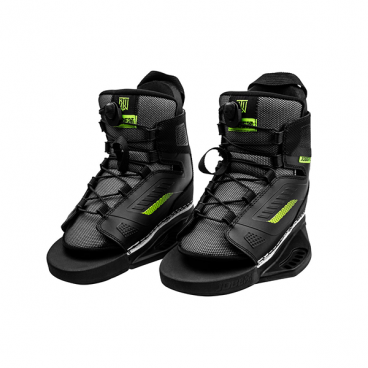
This type of model is linked to a binding system so that bindings can be attached.
The board has the advantages of the twin-tip wakeboard but also allows cable wakeboarding.
The hybrid wakeboard is an excellent compromise for riders who want to do wakesurfing and cable wakeboarding.
Even though wearing a helmet is not always mandatory, we recommend having a helmet for boat or cable use to ensure your safety.
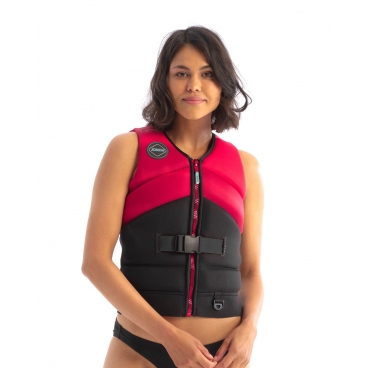
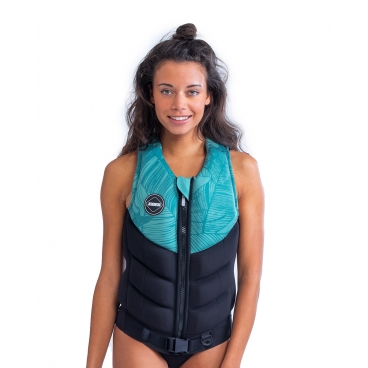
There is also a buoyancy and impact vest:
To provide buoyancy and protect the body from injury in the event of a fall, many brands now offer high-performance, comfortable life jackets to protect the wakeboard user.
To learn all the secrets of wakeboarding and start the discipline in the best conditions, read our article How to get started in wakeboarding.